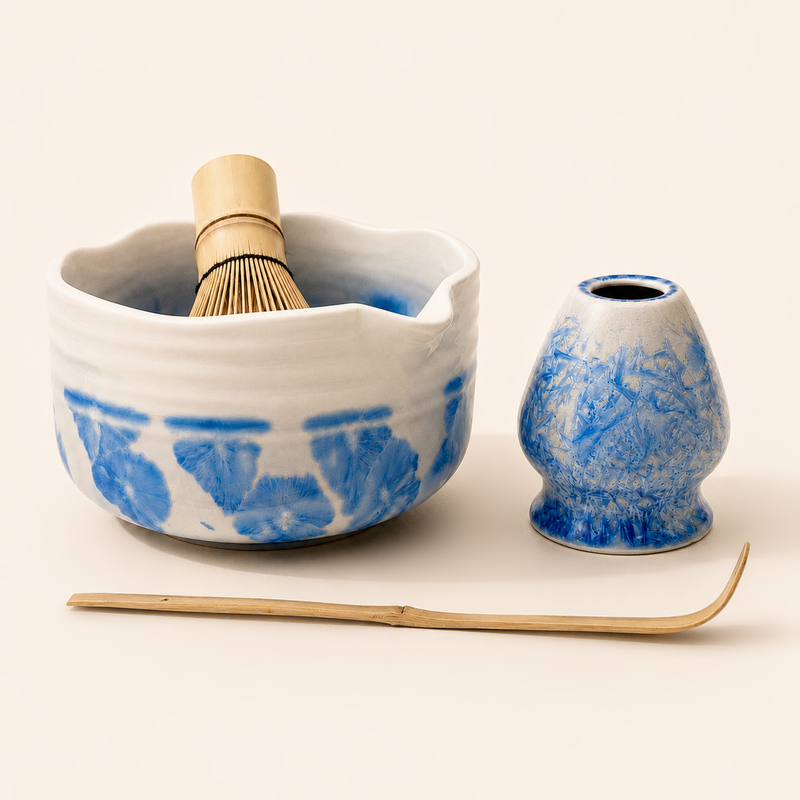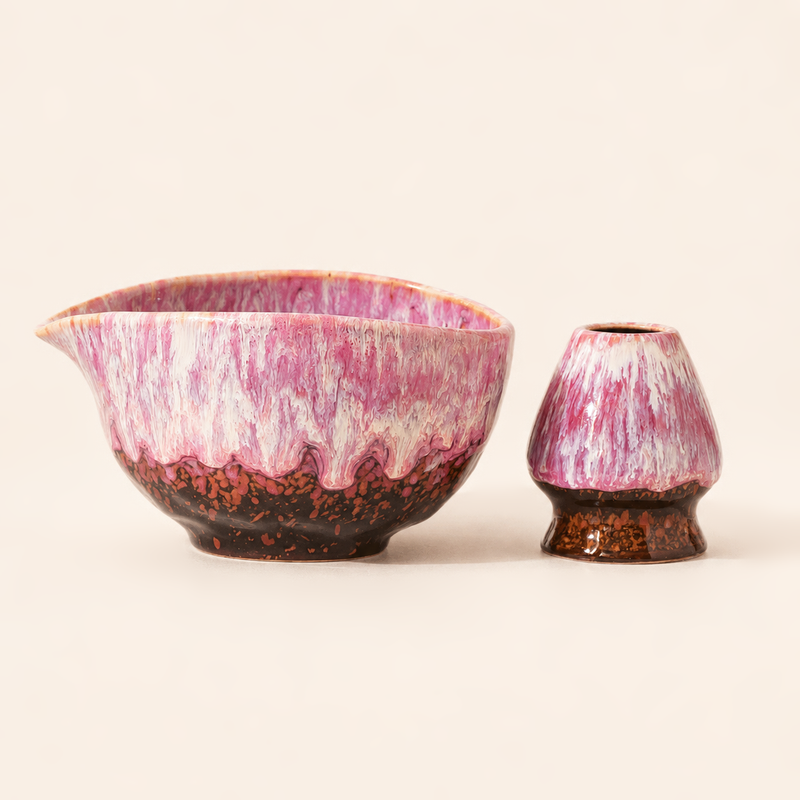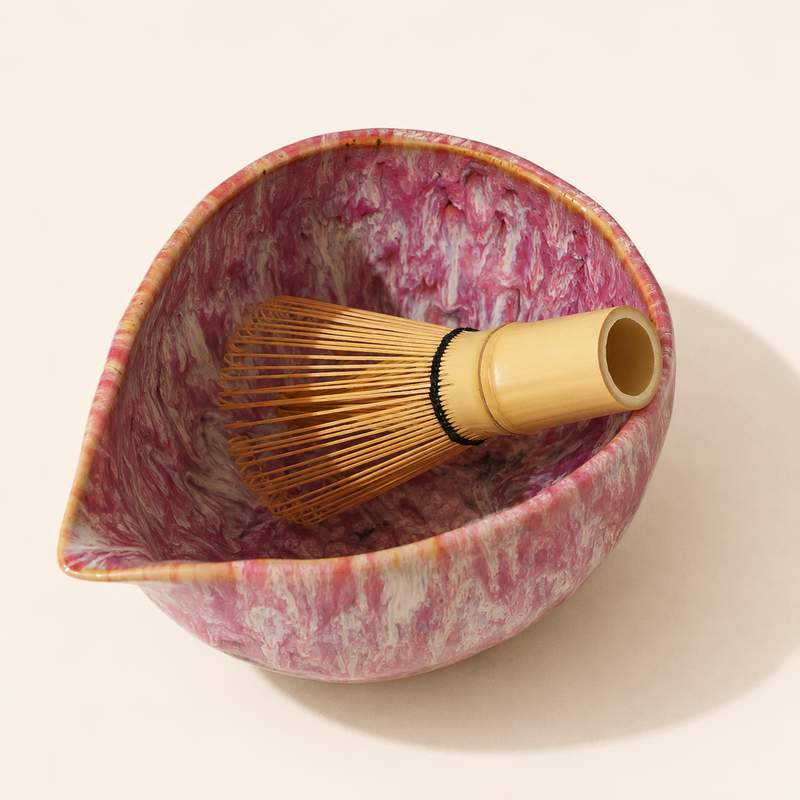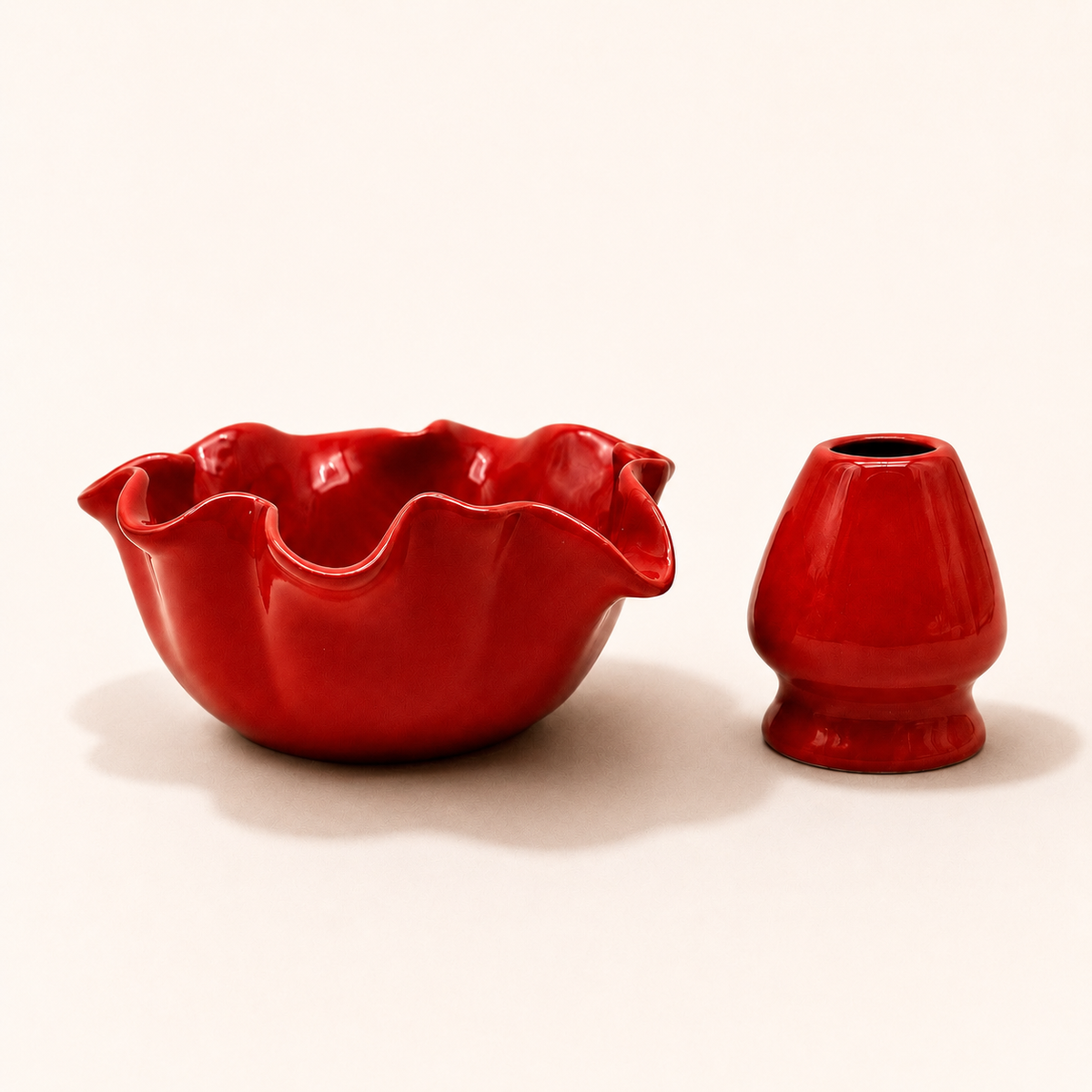
The petalled edge has a name in Japanese ceramics: rinka (輪花), a ring of flower. It belongs to a family of foliate rims that potters took from Chinese metalwork and have cut into bowls and dishes for centuries, shaping the mouth to echo a bloom rather than a circle.
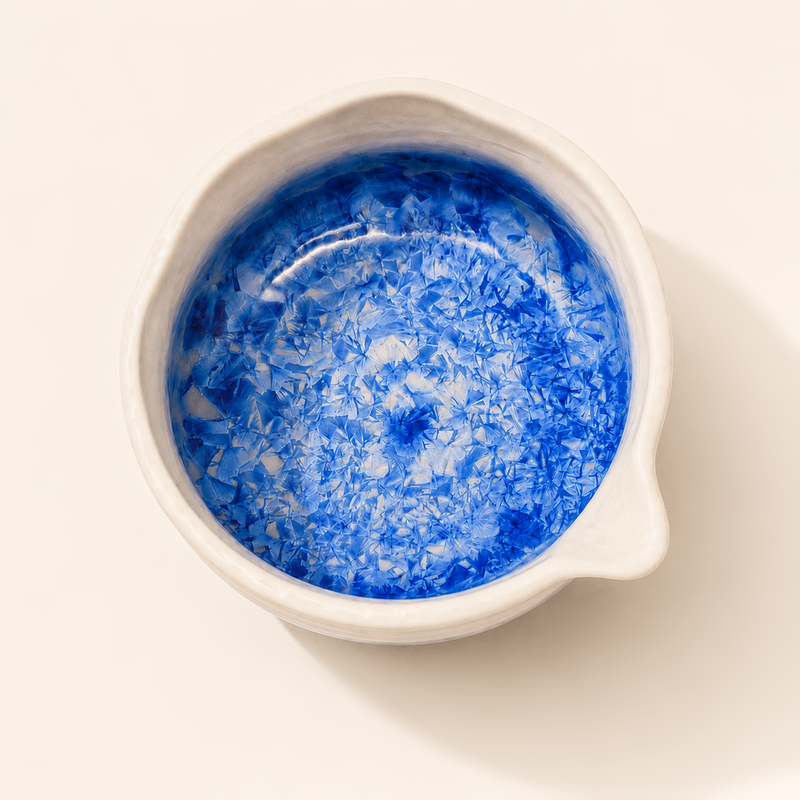
The rim is the hardest part of such a bowl to get right: each lobe has to lift and fall by the same measure, and the wall beneath has to stay even while it does. The red is laid on thick. It gathers in the troughs, where the colour goes deep and almost black at the fold, and pulls thin over the crests, where it brightens. That gradient is the glaze finding the form, not a second colour laid over it.
Each vessel is hand-thrown in small batches and high-fired to full vitrification, then sealed with a clear, food-safe dinnerware glaze. Slight variations in size, weight, and colour are not flaws but the signatures of a piece made by hand and finished by fire.
Hand wash with warm water and a soft cloth. Avoid abrasive sponges, harsh detergents, and the dishwasher, which dull the surface over time. The glaze is fully vitrified and food-safe.
Before whisking, warm the bowl with a little hot water and dry it — this steadies the temperature of your matcha and helps the foam hold.