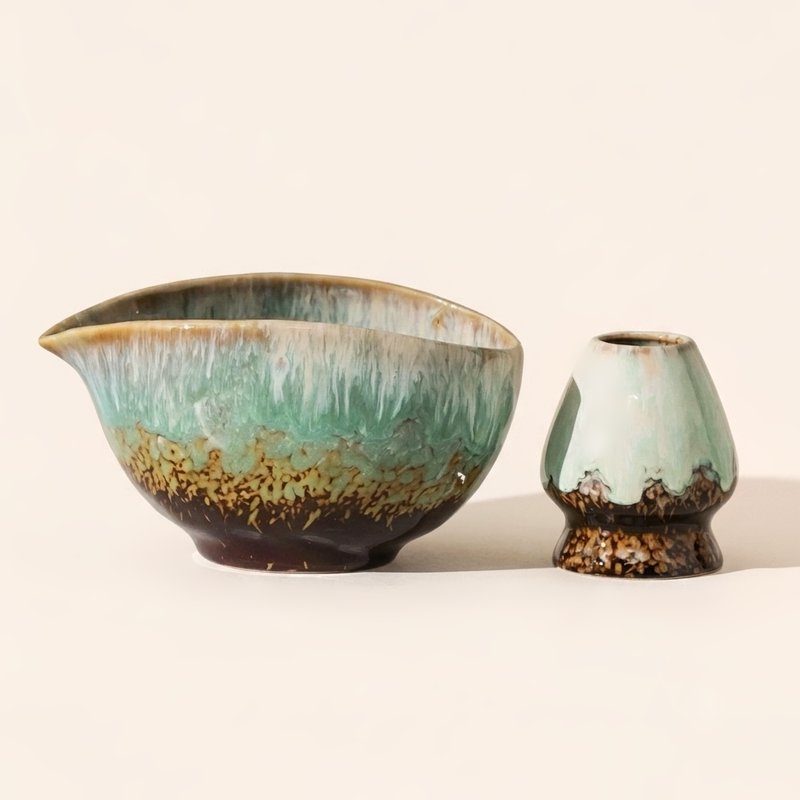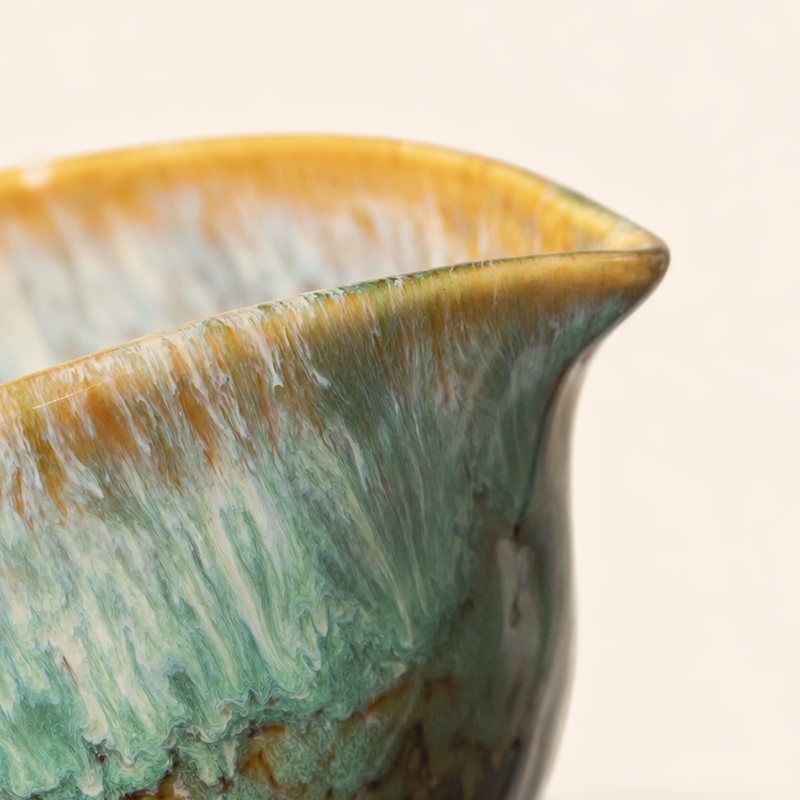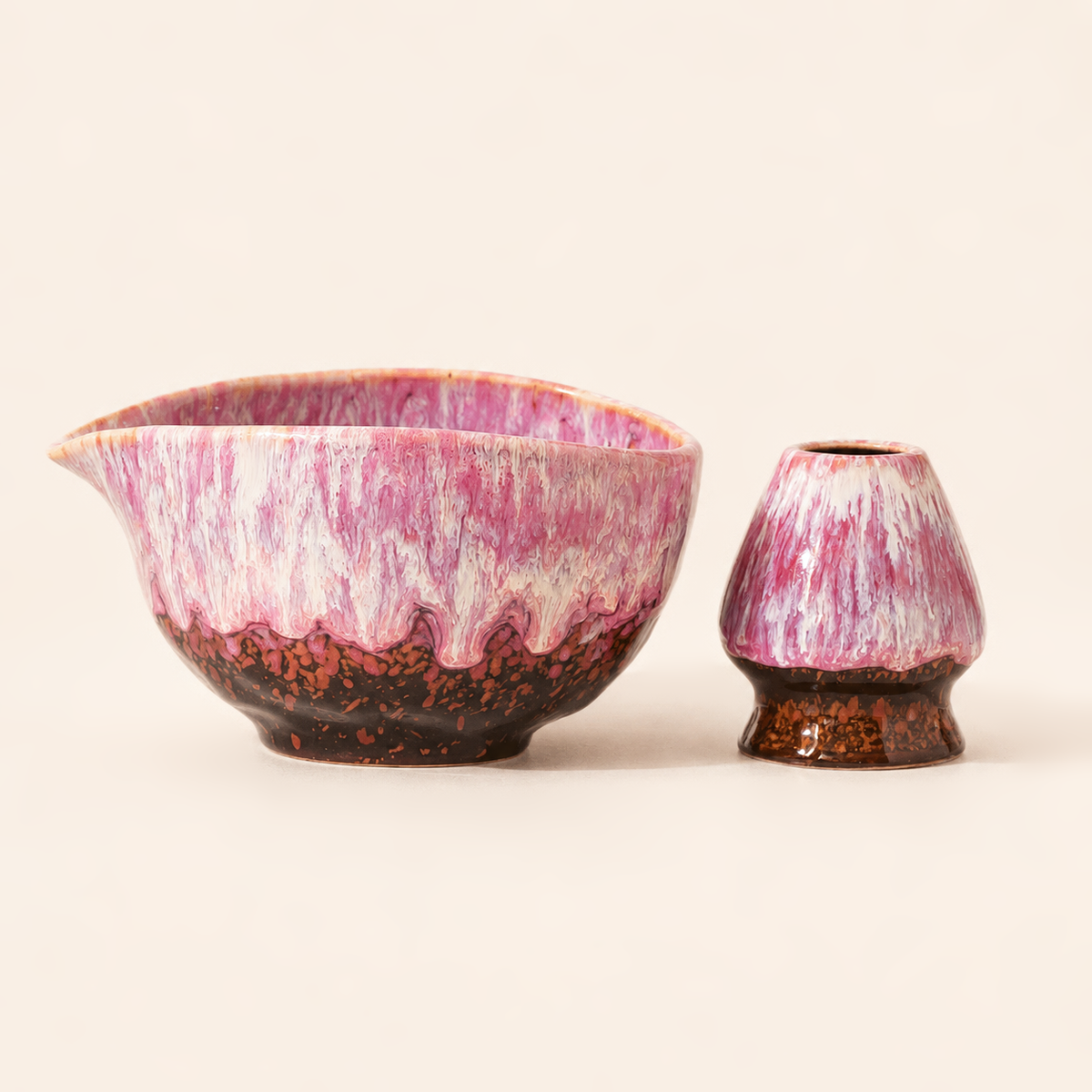
The curtains down this bowl were not brushed on. Nagashigusuri (流し薬) means poured glaze — a second glaze laid over the rim and left to find its own way down, under nothing but heat and gravity.
It sits over a dark, iron-saturated ground. At peak heat the pour turns to liquid glass: it thins where it stretches across the rim, gathers into lobes as it falls, and sets where the cooling kiln catches it. The rust flecks near the foot are iron crystallising out of the ground beneath. Where the run stops is the maker’s only real decision — a glaze that reaches the shelf fuses the pot to the kiln and destroys both.
Each vessel is hand-thrown in small batches and high-fired to full vitrification, then sealed with a clear, food-safe dinnerware glaze. Slight variations in size, weight, and colour are not flaws but the signatures of a piece made by hand and finished by fire.
Hand wash with warm water and a soft cloth. Avoid abrasive sponges, harsh detergents, and the dishwasher, which dull the surface over time. The glaze is fully vitrified and food-safe.
Before whisking, warm the bowl with a little hot water and dry it — this steadies the temperature of your matcha and helps the foam hold.