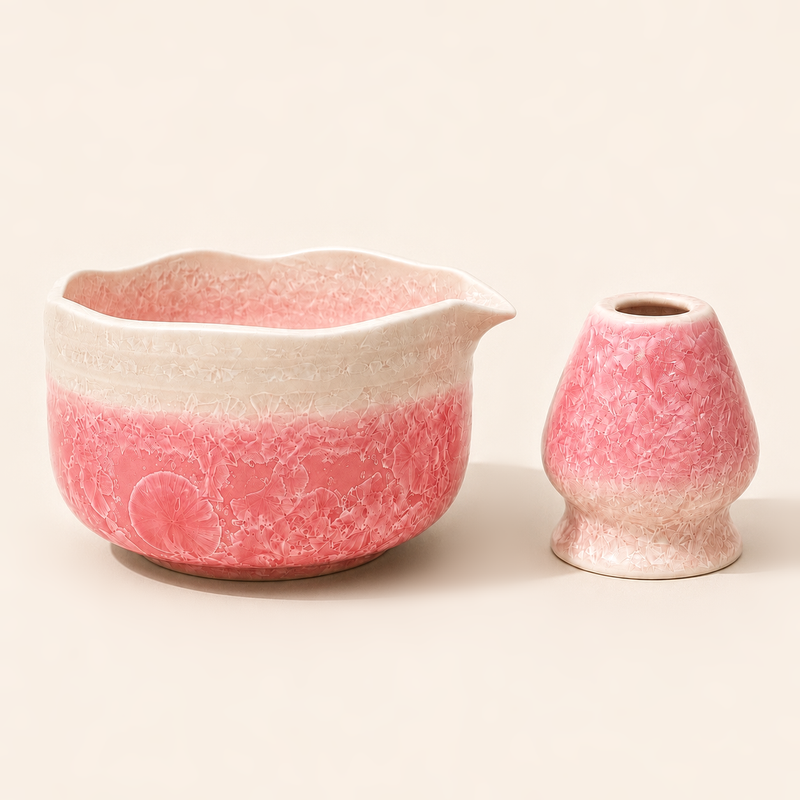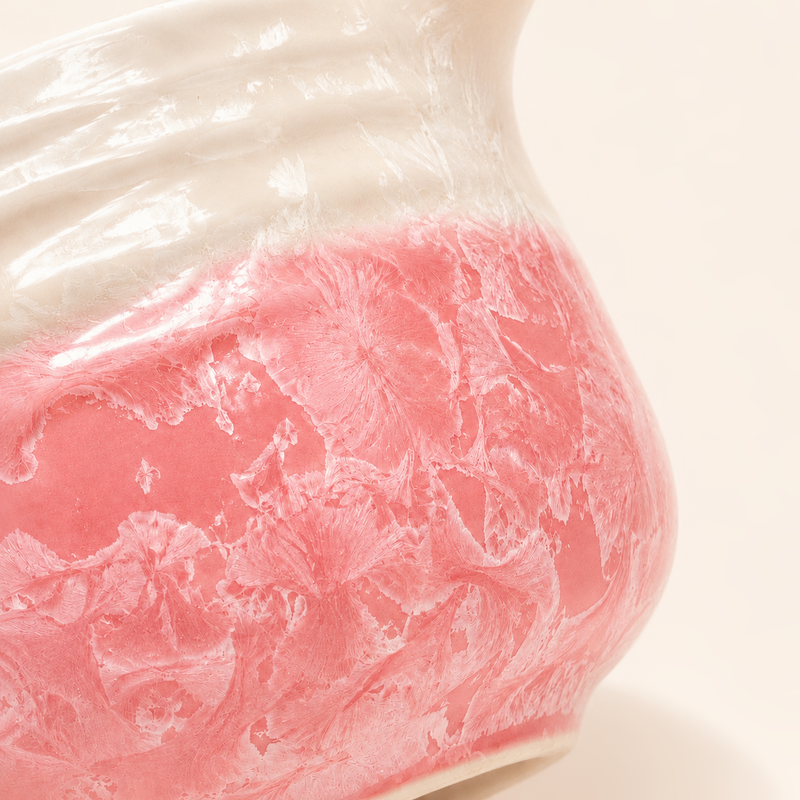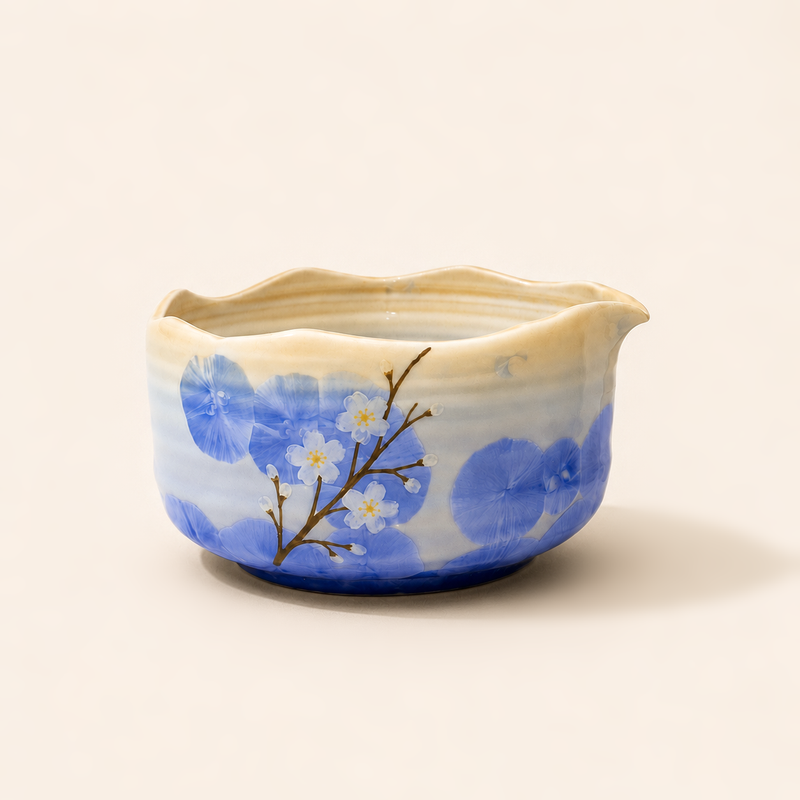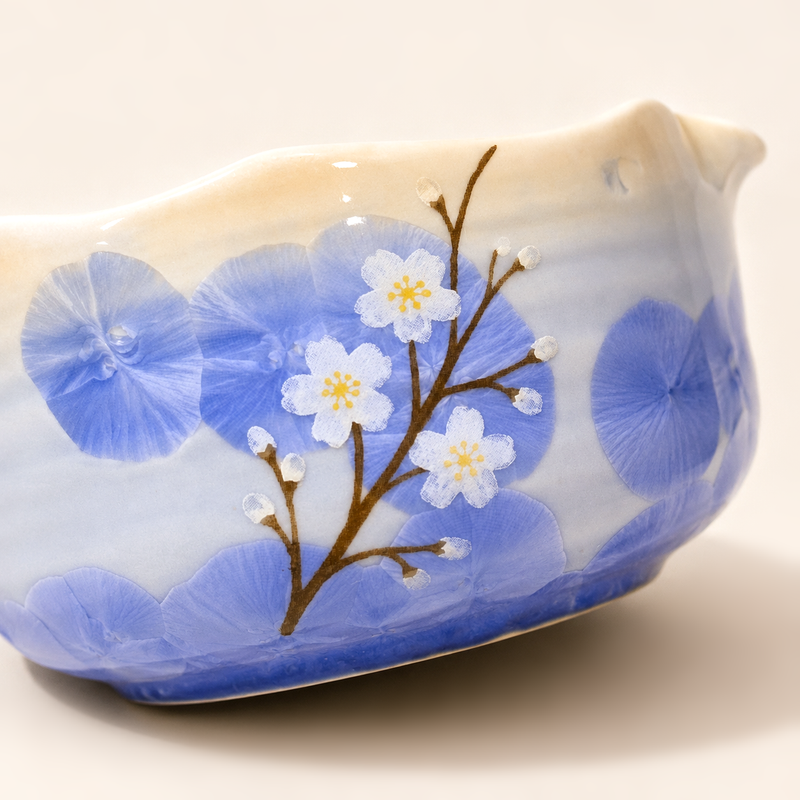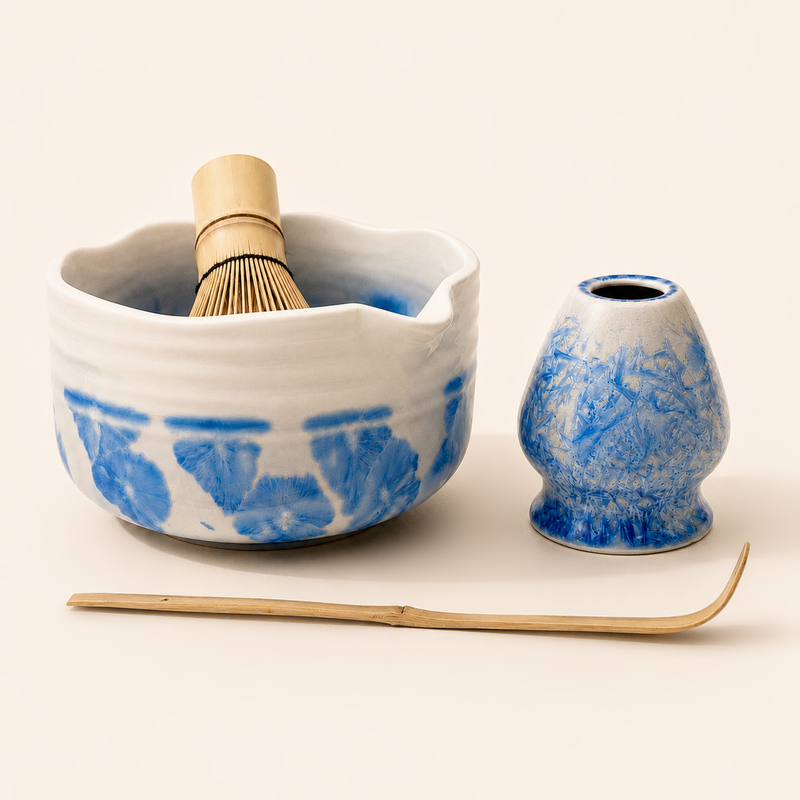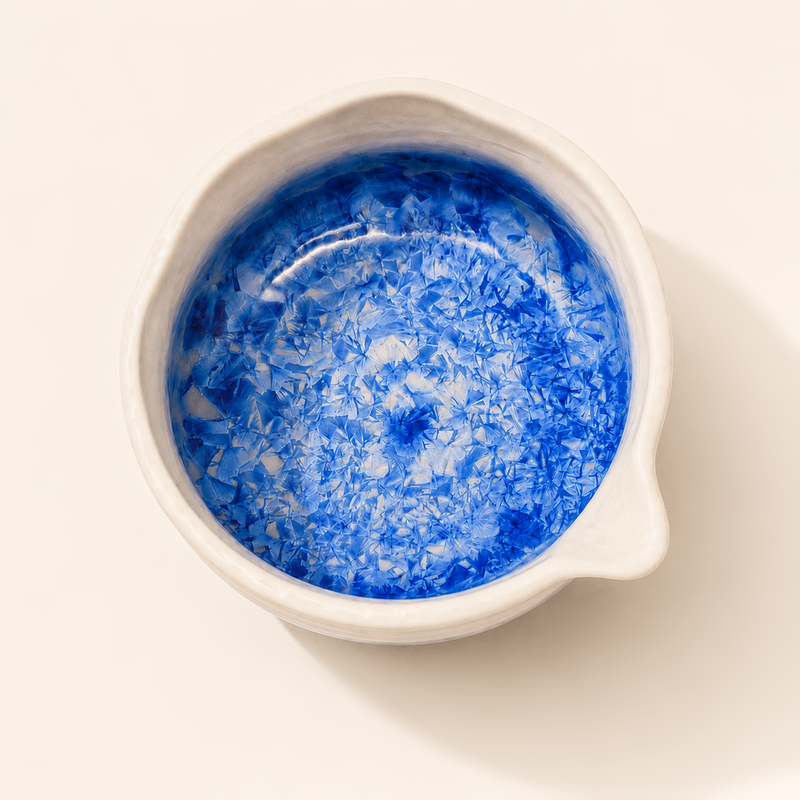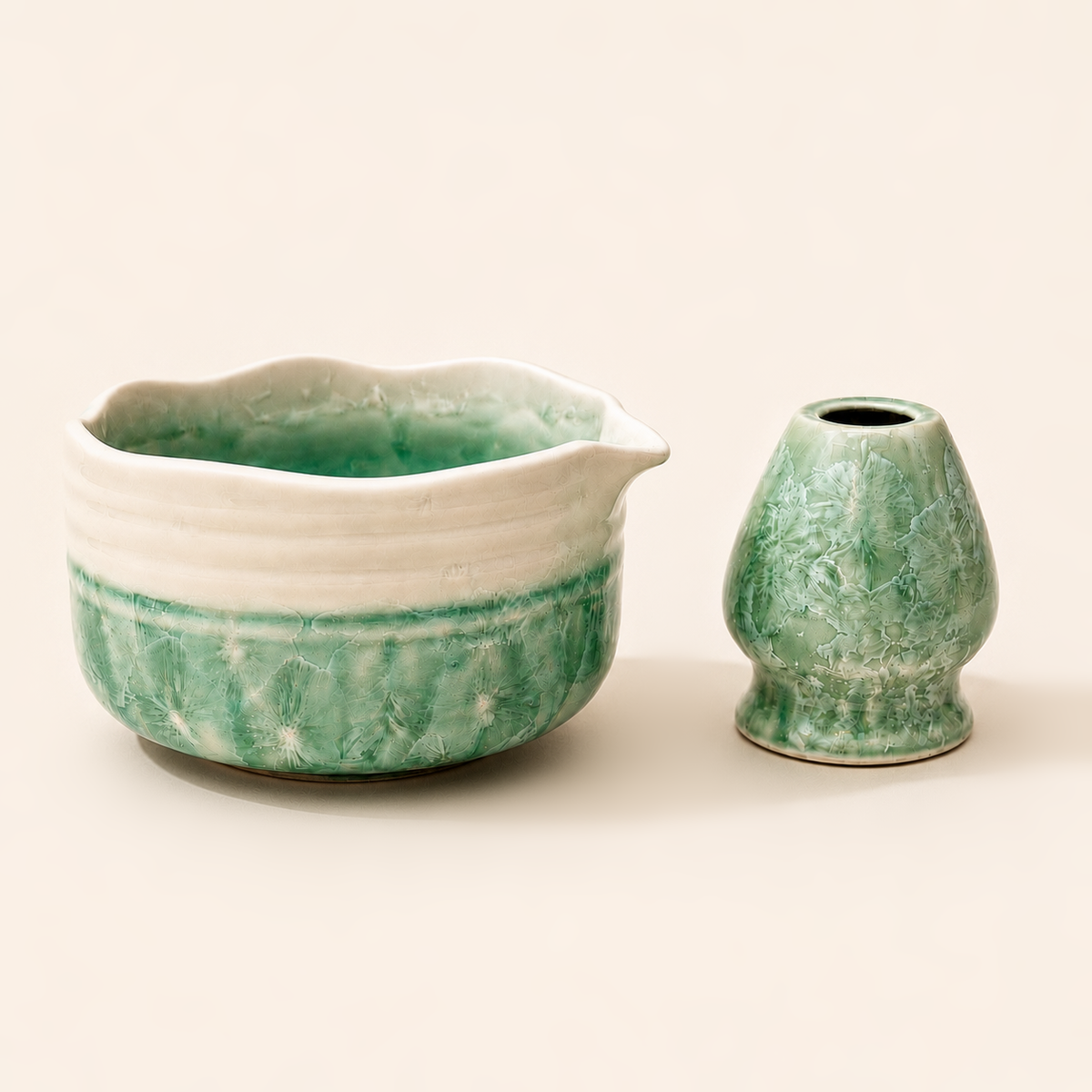
The blooms across this bowl are not painted or printed — they are grown inside the kiln. Crystalline glaze is among the most demanding finishes in all of ceramics, and one of the few where the maker must hand the final decision to fire and chemistry.
The recipe is deliberately unstable: heavy in zinc and silica, almost free of the alumina that normally holds a glaze in place. At peak heat it turns to running glass; as the kiln cools through a narrow window near 1,000°C, crystals seed and spread into the snowflake-like flowers you see. Drift a few degrees and nothing blooms at all.
Each vessel is hand-thrown in small batches and high-fired to full vitrification, then sealed with a clear, food-safe dinnerware glaze. Slight variations in size, weight, and colour are not flaws but the signatures of a piece made by hand and finished by fire.
Hand wash with warm water and a soft cloth. Avoid abrasive sponges, harsh detergents, and the dishwasher, which dull the surface over time. The glaze is fully vitrified and food-safe.
Before whisking, warm the bowl with a little hot water and dry it — this steadies the temperature of your matcha and helps the foam hold.